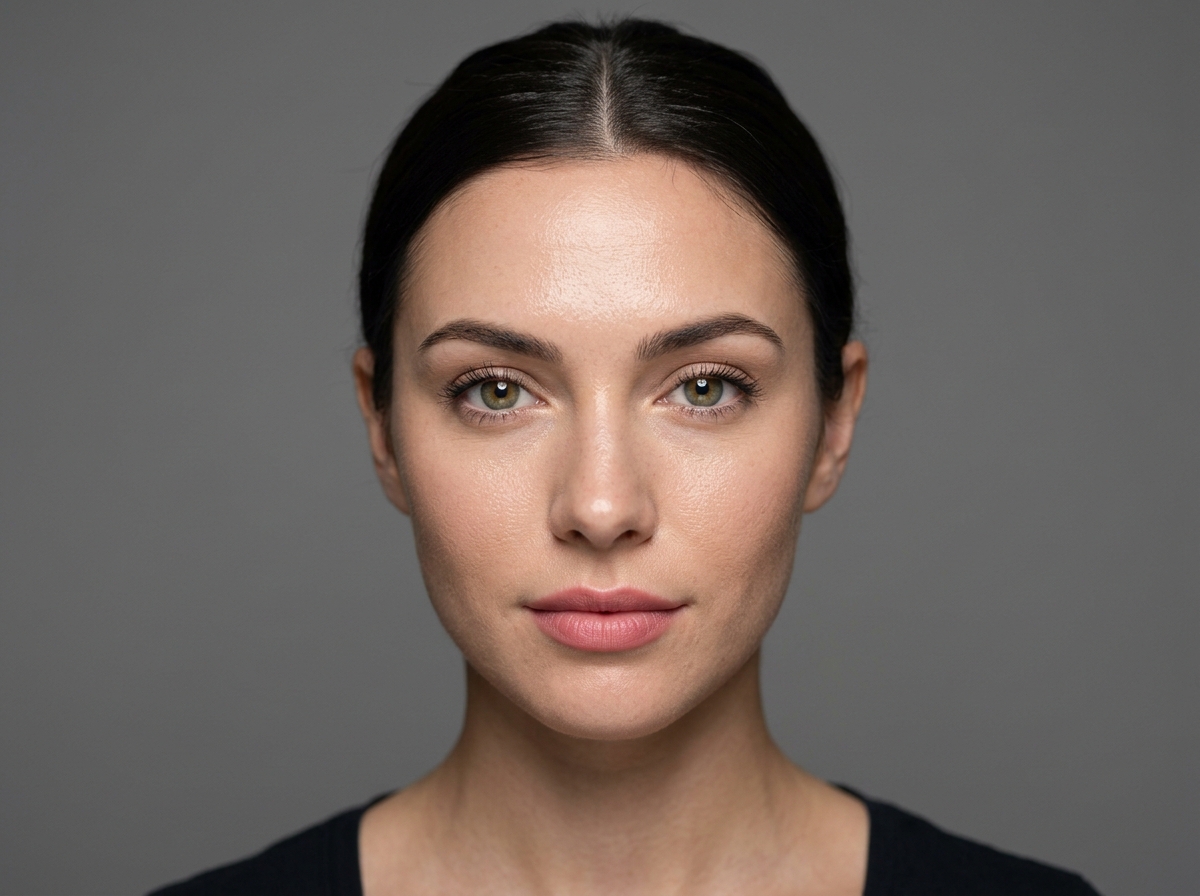
1. The State of AI Image Generation in 2026
The era of generic "AI art" is over. Creative studios, marketing agencies, and software developers now evaluate models through rigorous commercial criteria: Can the model spell a company name correctly on a neon storefront? Can it render a hand holding a wine glass without adding a sixth finger? Can it reproduce the exact lighting of a 35mm film camera?
To answer these questions empirically, our engineering team evaluated 1,500 standardized test generations across 5 flagship model architectures.
2. Comprehensive Comparison Matrix
| Evaluation Category | FLUX 1.1 Pro | Midjourney v6.1 | Google Imagen 3 | OpenAI (ChatGPT / DALL-E) | Stable Diffusion 3.5 Large |
|---|---|---|---|---|---|
| Architecture | 12B Rectified Flow DiT | Proprietary Closed DiT | Cascaded Diffusion + Gemini | Unified Multimodal Transformer | 8B Multimodal DiT |
| Text & Typography | 98.1% Accuracy | 81.4% Accuracy | 94.6% Accuracy | 98.4% Accuracy | 86.2% Accuracy |
| Human Skin Pores | Natural micro-dermal | Smooth cinematic glow | Clean commercial tone | Photographic dynamic range | Good with negative prompts |
| Hands & Finger Physics | 96.4% anatomical success | 89.2% anatomical success | 92.1% anatomical success | 94.8% anatomical success | 84.5% anatomical success |
| Native Output Res | 2K Native (Upscalable to 16K) | 1024 × 1024 / 2048 × 2048 | 1024 × 1024 | 1024 × 1024 / 1792 × 1024 | 1024 × 1024 |
| Inference Latency | 2.4 – 3.8s (Edge Turbo) | 15 – 35s (Discord queue) | 4.2 – 6.5s | 3.8 – 5.5s | 8 – 14s (Local 4090) |
| Weights Availability | Open (Schnell/Dev), API (Pro) | Strictly Closed | Strictly Closed | Strictly Closed | Open Weights |
3. Deep-Dive: Stress-Testing Key Capabilities
Vector A: Complex Multi-Subject Spatial Layouts
Stress Prompt: "A vintage wooden café table in Paris. On the left, a ceramic cup of black espresso with rising steam. In the center, a folded copy of Le Monde newspaper with readable headline 'TECH 2026'. On the right, a half-eaten buttery croissant on a white napkin. Shot from a 45-degree angle with soft morning sunlight casting shadows to the right."
- FLUX 1.1 Pro: Handled the spatial left/center/right distribution flawlessly. The headline "TECH 2026" was perfectly spelled in bold serif typography. Shadow falloff direction correctly respected the morning sun vector.
- Google Imagen 3: Extremely accurate spatial separation. Newspaper layout resembled authentic print, with slight blurring on secondary text lines.
- Midjourney v6.1: Rendered the most artistic and aesthetic mood, but frequently swapped the croissant to the left and blended the napkin into the newspaper.
Vector B: Human Anatomy & Optical Realism
Stress Prompt: "Close-up macro portrait of a 42-year-old Japanese ceramic artist inspects a cracked porcelain bowl. Hands covered in wet clay holding the bowl delicately with all ten fingers clearly visible. Authentic skin pores, fine smile lines around eyes, natural iris catchlights, 85mm f/1.8 optical bokeh."
- FLUX.1 Pro: Produced breathtaking realism. Skin exhibited subtle imperfections, pores, and sub-surface scattering. Wet clay texture adhered realistically to finger cuticles without merging the fingers into the bowl.
- OpenAI / ChatGPT: Strong conceptual fidelity, but fingers exhibited subtle plastic smoothing where clay met skin.
- SD 3.5 Large: High quality, but required iterative negative prompting to prevent occasional finger fusing.
4. Which Model Should You Use for Your Use Case?
No single model dominates every commercial scenario. Here is our recommended allocation framework:
- For E-Commerce & Product Packshots: Use FLUX.1 Pro paired with 16K Super-Resolution. The sub-pixel edge fidelity and absence of artificial smoothing ensures customer trust.
- For Marketing Banners & Social Ads: Use FLUX 1.1 Pro or Google Imagen 3 for their superior typographic rendering and precise color matching.
- For Creative Ideation & Storyboarding: Use Google Nano Banana 2 for sub-second, ultra-cheap exploration before committing to final high-res renders.
- For Fantasy & Video Game Concept Art: Midjourney v6.1 remains excellent for moody, painterly, and surreal concept exploration.
Test the World's Best Models Side-by-Side
Compare FLUX 1.1 Pro, Google Nano Banana, and Imagen 3 directly in FLUX AI Studio with instant model switching.
Launch Studio GeneratorFrequently Asked Questions
Why does FLUX perform better on text than Midjourney?
FLUX integrates Google's massive T5-XXL language encoder (over 4.7 billion parameters dedicated purely to textual understanding), whereas Midjourney relies primarily on CLIP text encoders that compress multi-character words into single lossy embeddings.
Can I use FLUX models for commercial packaging?
Yes. Generations from FLUX.1 Pro and FLUX 1.1 Pro in FLUX AI Studio are fully licensed for commercial usage, advertising campaigns, and client deliverables.
How does 16K Upscaling improve these models?
Most generative models output natively at 1024x1024 or 2048x2048. FLUX AI Studio's 16K Latent Upscaler adds genuine structural detail, expanding files up to 16,384 pixels for billboard printing and ultra-HD screens.