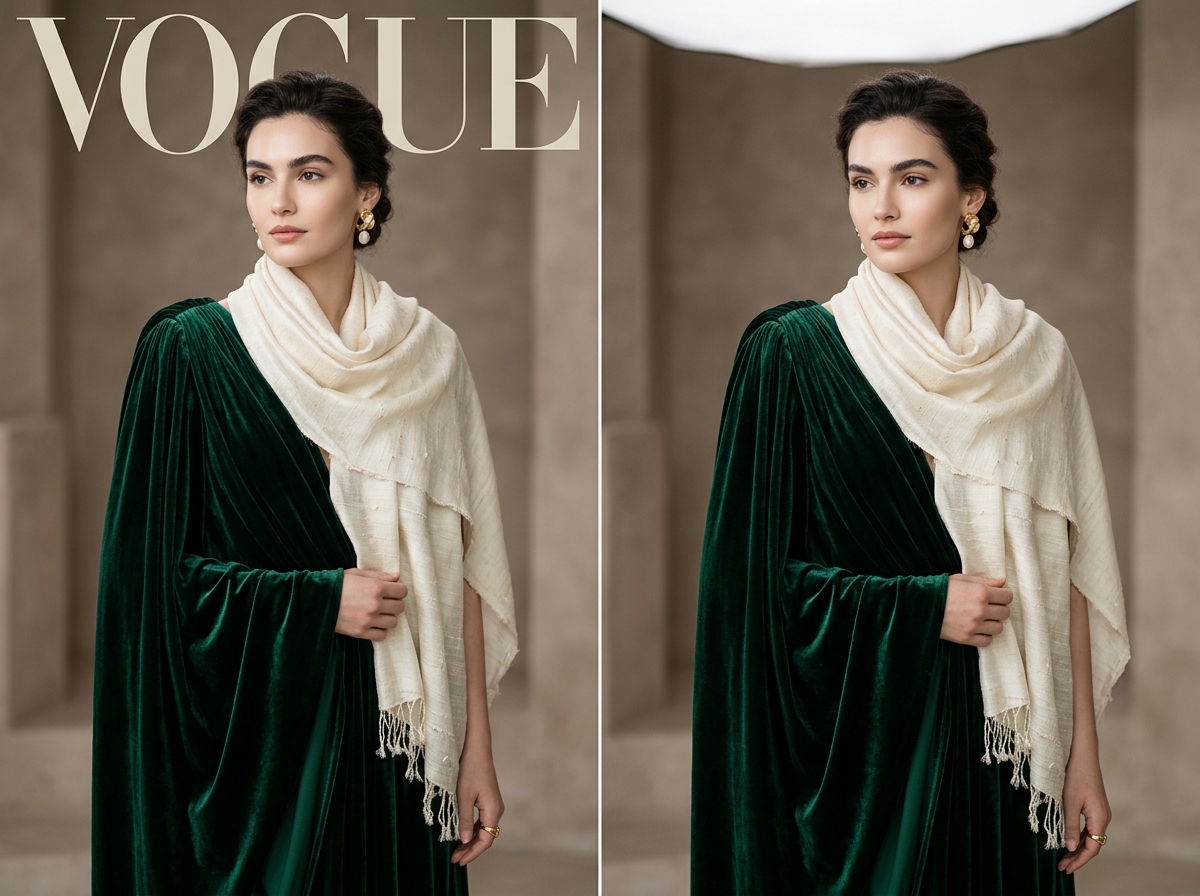
1. The Rebirth of Open Generative Vision
In early 2024, the generative AI landscape was consolidating rapidly into closed garden APIs. Midjourney, DALL-E 3, and Adobe Firefly guarded their model weights behind subscription paywalls and strict corporate safety filters.
That monopoly shattered when Black Forest Labs (BFL) emerged from stealth. Founded by Robin Rombach, Patrick Esser, and Andreas Blattmann—the original research team at Ludwig Maximilian University of Munich who authored the seminal High-Resolution Image Synthesis with Latent Diffusion Models paper—BFL released the FLUX family: open-weight architectures that matched or surpassed the best proprietary models in the world.
2. What Makes Flow Matching Superior to Classical Diffusion?
To understand why FLUX models produce photographs that look authentically captured through glass rather than hallucinated by computer code, one must understand Flow Matching.
Classical diffusion models (like Stable Diffusion 1.5 and SDXL) simulate a random Brownian motion path from a pure Gaussian noise distribution to data. Because the trajectory is curved and stochastic, the numerical solver must take many small steps (typically 30 to 50) to prevent deviations.
Flow Matching, by contrast, trains the neural network to learn a straight-line velocity field connecting noise to data. Because the vector paths are straight lines (Rectified Flow), the model can traverse from noise to pristine 1080p pixels in as few as 4 to 12 steps without losing high-frequency details like pores, eyelash follicles, or fabric weave.
| FLUX Model Tier | Parameter Count | Recommended Steps | License Type | Primary Strengths |
|---|---|---|---|---|
| FLUX.1 [schnell] | 12 Billion | 4 Steps | Apache 2.0 (Open Source) | Blazing fast on local consumer GPUs (RTX 4090 / Mac M3). |
| FLUX.1 [dev] | 12 Billion | 20 – 28 Steps | Non-Commercial Research | Uncompromised fidelity; ideal for LoRA training & fine-tuning. |
| FLUX.1 [pro] | 12 Billion+ | Dynamic Solver | Proprietary BFL API | Maximum commercial fidelity, prompt adherence, zero watermark. |
| FLUX 1.1 [pro] | Next-Gen Architecture | Sub-2s Engine | Proprietary BFL API | 6x speed increase, native 2K output, photorealistic HDR optics. |
3. The Death of the "Plastic AI Look"
Every creator is familiar with the synthetic "AI glaze"—oversaturated colors, unnaturally smooth waxy skin, and glowing rim lights that scream "midjourney prompt."
FLUX achieves photographic realism because its dual-encoder pipeline (combining Google's T5-XXL language model and CLIP ViT-L/14) understands the physical behavior of light interacting with human anatomy:
- Sub-Surface Dermal Scattering: Skin allows light to penetrate slightly and scatter internally, creating natural warmth rather than painted wax.
- Authentic Depth of Field: True chromatic aberration and natural lens flare derived from physical aperture specifications (e.g., 85mm f/1.4).
- Complex Anatomical Topology: Accurate interlocked fingers, natural fingernail cuticles, and proportional ear geometry.
For researchers exploring the mathematical foundations of vector fields in generative modeling, refer to Flow Matching for Generative Modeling (Lipman et al., 2023) at ArXiv:2210.02747.
4. Practical Guide: Fine-Tuning LoRAs on FLUX.1 [dev]
One of FLUX's most decisive advantages over closed tools like Midjourney is the vibrant ecosystem of community and commercial Low-Rank Adaptations (LoRAs).
Whether creating a consistent virtual influencer, locking an enterprise product likeness, or replicating a signature brand aesthetic:
- Dataset Quality Over Quantity: 25 to 40 pristine, high-resolution photographs with diverse camera angles and lighting setups yield significantly better results than 500 low-quality scraped crops.
- Captioning Hygiene: Use full descriptive natural language captions generated with multimodal LLMs, avoiding repetitive token triggers.
- Rank & Alpha Configuration: For character likeness, a LoRA rank of
16with alpha16balances expressiveness and generalization. For complex architectural styles, scale to rank32.
Harness the Power of FLUX in Your Workflow
Experience FLUX.1 Pro and FLUX 1.1 Pro with native 16K super-resolution upscaling and canvas inpainting.
Launch FLUX Studio GeneratorFrequently Asked Questions
Is FLUX.1 Schnell completely open source?
Yes. FLUX.1 Schnell is released under the Apache 2.0 license, meaning developers and commercial enterprises can self-host, modify, and distribute outputs without royalties.
What GPU do I need to run FLUX locally?
Running unquantized FP16 FLUX requires ~24GB of VRAM (RTX 3090, RTX 4090, or Apple M-Series with 32GB+ Unified Memory). With 8-bit or 4-bit GGUF/NF4 quantization, FLUX runs comfortably on 12GB to 16GB consumer GPUs.
How does FLUX AI Studio access FLUX 1.1 Pro?
FLUX AI Studio connects directly to high-throughput enterprise inference clusters, delivering sub-3-second FLUX 1.1 Pro generations with zero hardware setup required on your device.