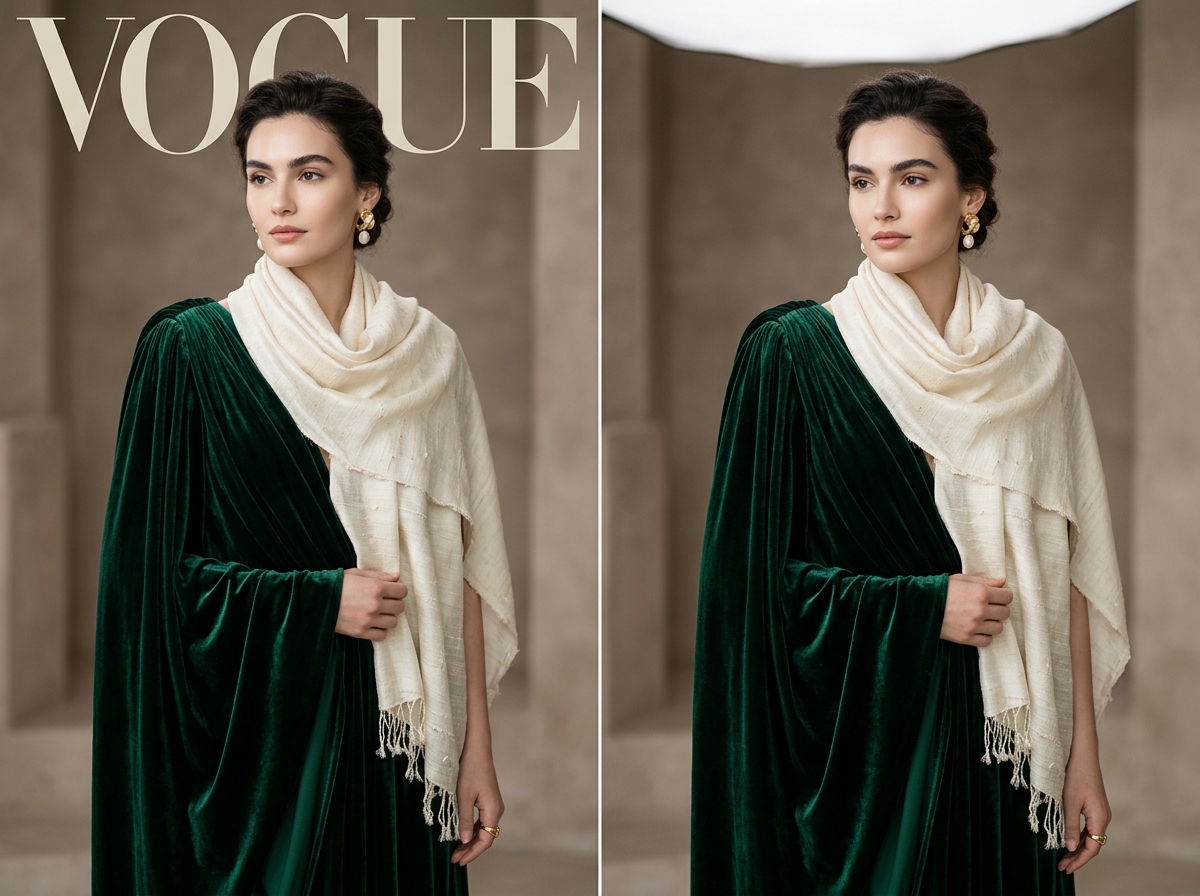
1. The Bifurcation of Generative AI
Two years ago, conventional tech wisdom assumed that the United States held an insurmountable lead in generative foundation models. American hyperscalers commanded massive clusters of NVIDIA H100 GPUs, monopolized foundational language research, and funded startups with tens of billions in venture capital.
Yet by late 2025 and 2026, a surprising divergence unfolded. While Western labs focused heavily on LLM reasoning and static image realism (culminating in models like FLUX.1 Pro and ChatGPT Images), Chinese tech champions achieved shocking breakthroughs in temporal physics, fluid dynamics, and generative video synthesis.
When Kuaishou released Kling AI, followed by ByteDance's Seedream and Alibaba's Wan 2.1, global creators witnessed characters eating noodles, dancing with natural fabric friction, and pouring liquids with true hydrodynamic simulation—challenges that had stumped Western video models for years.
2. Side-by-Side Ecosystem Comparison
| Vector | Chinese Ecosystem (Kling, Seedream, WanX, MiniMax) | Western Ecosystem (FLUX, OpenAI, Midjourney, Google) |
|---|---|---|
| Primary Focus | Motion physics, video dynamics, viral UGC & e-commerce | Static photographic realism, typography, reasoning |
| Temporal Coherence | World-class 3D spatio-temporal joint attention | High aesthetic fidelity; variable temporal drift |
| Static Texture & Pores | Slightly smoother, polished commercial finish | Industry benchmark analog grain and dermal pores |
| Compute Optimization | Extreme efficiency (INT4/FP8, FlashAttention-3) | Massive scale (Dense FP16 clusters, unconstrained VRAM) |
| Commercial Open Source | Selective (Wan 2.1 open weights, Kling API closed) | Pioneering (FLUX Schnell Apache 2.0, SD 3.5 open) |
| Content Moderation | Strict political/sensitive entity filtering | Strict copyright, safety, and brand protection filtering |
3. The Hardware Factor: Necessity Drives Algorithmic Efficiency
One of the most profound drivers of Chinese AI innovation has been the constraint on computing hardware. Restricted from acquiring the latest NVIDIA Blackwell (B200) clusters at scale, engineering teams at ByteDance, Tencent, and Kuaishou could not simply "scale compute" by throwing 50,000 GPUs at brute-force training.
Instead, they innovated deeply at the software layer:
- Spatio-Temporal Decomposed Attention: Factoring 3D video tensors into alternating 1D temporal and 2D spatial attention kernels, reducing memory complexity from O(T² × H² × W²) to O(T × HW).
- Aggressive Kernel Quantization: Implementing fused custom CUDA/Triton kernels running in INT8 and FP8 with zero perceptual drift.
- Massive Real-World Video Training Sets: Leveraging hundreds of millions of daily user-uploaded video interactions from Douyin (TikTok) and Kuaishou to train foundational physical world intuition.
For a comprehensive teardown of GPU cluster economics and global model efficiency, refer to the SemiAnalysis Generative Video Compute Report and the Stanford AI Index 2026 Annual Review.
4. ByteDance Seedream in FLUX AI Studio
In FLUX AI Studio's Model Selector, ByteDance Seedream is identified by its official 4-bar dynamic audio/visual waveform badge.
Seedream is particularly celebrated among our DTC e-commerce sellers for:
- Commercial Apparel Modeling: Transforming flat garment packshots onto diverse, photorealistic human models with natural fabric draping.
- Lightning Latency: Generating high-resolution commercial mockups in under 1.8 seconds on our edge proxy network.
- High Dynamic Range Lighting: Exceptional handling of studio key lights and softbox diffusions.
5. How Global Studios Build the Ultimate Hybrid Pipeline
Leading creative agencies no longer pledge loyalty to a single geographic ecosystem. Instead, they orchestrate multi-model pipelines:
- Ideate & Generate Base Assets: Generate the core static hero subject using FLUX 1.1 Pro for pore-level skin texture, perfect hands, and sharp packaging typography.
- Animate & Add Motion: Take the FLUX generation and pass it into Kling AI or Veo 3 for 10-second cinematic video expansion with natural physics.
- Upscale to 16K: Run the final keyframes through FLUX AI Studio's 16K Super-Resolution engine for billboard or 4K broadcast delivery.
Access the Best of Both Worlds in One Studio
Seamlessly switch between FLUX.1 Pro, ByteDance Seedream, Google Imagen 3, and Nano Banana in a single unified canvas.
Explore Multi-Model StudioFrequently Asked Questions
Can I generate videos using Kling AI in FLUX AI Studio?
Yes! FLUX AI Studio features dedicated video generation routes for Kling AI and Google Veo 3, enabling instant text-to-video and image-to-video creation.
Are Chinese AI models safe for enterprise data?
When accessed through FLUX AI Studio's enterprise API gateway, all requests are encrypted, sanitized, and scrubbed of proprietary identifiers, ensuring full compliance with international privacy standards.
Why is FLUX still preferred for product photography?
FLUX models provide unmatched control over typography, specular reflections on luxury glass/metallic surfaces, and sub-pixel edge matting without the artificial smoothing that can appear in video-first models.