
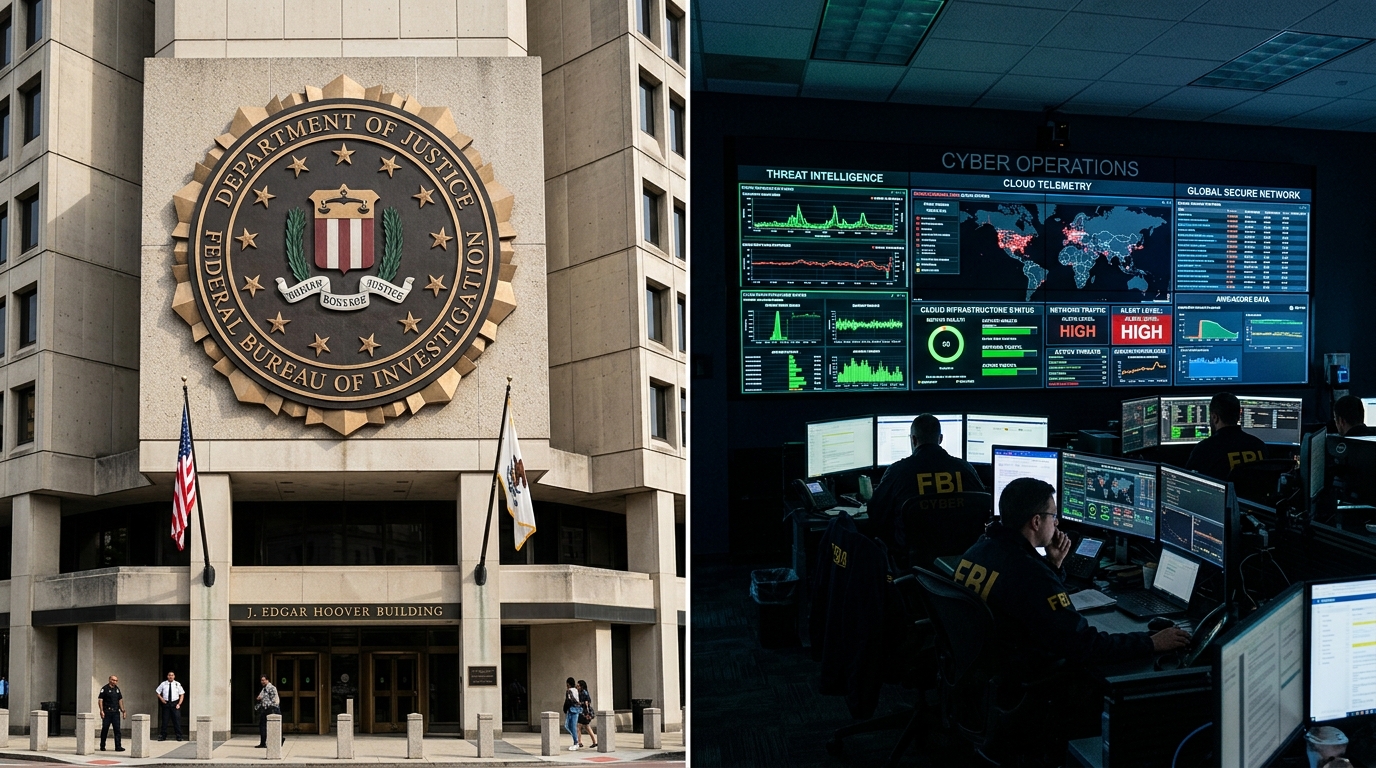
1. The Dark Web Leak and Independent Verification
On Tuesday morning, the cybersecurity community was jolted when ShinyHunters posted a staggering announcement on its dark web leak platform. The syndicate claimed it had exfiltrated:
“Sensitive data on almost all FBI agents and individuals who filed an application with the FBI for a job.”
While dark web extortionists frequently exaggerate their hauls, this claim quickly took a grim turn. Investigative journalists at 404 Media obtained a sample batch of the stolen records and verified the real names, residential addresses, and cell numbers of active special agents and their spouses against public records.
Simultaneously, visitors attempting to access the FBI’s public jobs portal were greeted with a notice stating the portal was “currently down for maintenance,” with the special agent application intake system also taken offline.
2. Attack Vector Analysis: The Peril of Legacy HR Software
How does a criminal group penetrate the premier law enforcement and domestic intelligence agency on Earth? According to initial forensics, the compromise did not begin at the FBI's high-security Criminal Justice Information Services (CJIS) core, but rather through a routine human resources portal:
| Attack Phase | System Targeted | Vulnerability / Mechanism | Impact |
|---|---|---|---|
| Phase 1: Initial Ingress | Oracle PeopleSoft HR Server | Unpatched web app vulnerability / exposed credentials | Full compromise of applicant tracking system |
| Phase 2: Privilege Escalation | Internal Service Account | Hardcoded IAM roles and over-permissive tokens | Lateral movement across staging VPC |
| Phase 3: GovCloud Pivot | Amazon Web Services GovCloud | Federated role assumption via compromised identity | Access to terabytes of historical agent files |
| Phase 4: Defacement & Exfil | FBI Public Recruiting Site | S3 bucket / CDN asset tampering | Public outage and data extortion disclosure |
This attack chain exemplifies the classic enterprise security blind spot: ancillary legacy services. While perimeter defenses around national security wiretaps and classified enclaves are fortified with multi-factor biometric authentication and air-gapping, recruitment servers running software like Oracle PeopleSoft often lag behind in patch cycles, providing attackers with a high-value lateral launchpad.
3. The Counterintelligence Fallout: Beyond Ransomware
Unlike commercial ransomware syndicates that encrypt drives and demand tens of millions in Bitcoin, ShinyHunters has declared this hack as purely punitive. Their demand is that the FBI remove an official law enforcement report that the group claims contains fabricated allegations.
However, the real danger is far more profound than public relations:
- Hostile Foreign Espionage: Foreign intelligence services (such as Russia’s SVR, China’s MSS, and Iran’s MOIS) actively monitor dark web breach data to cross-reference federal personnel. Unmasking undercover counterintelligence operatives creates life-threatening liabilities.
- Spear-Phishing & Credential Spraying: Having verified personal phone numbers and home addresses enables hyper-targeted SMS phishing (smishing), SIM swapping, and physical surveillance against agents' families.
- Applicant Blackmail: Applicants who failed polygraphs or disclosed sensitive background information during the FBI's vetting process could be coerced into cooperating with adversaries.
4. A Troubling Pattern of Federal Breaches in 2026
This incident marks the latest in a string of serious security lapses affecting federal law enforcement this year. Earlier in 2026, unidentified state-aligned threat actors breached an FBI system utilized for coordinating court-authorized real-time wiretaps and surveillance warrants. In a separate incident, an Iranian-linked cluster known as Handala compromised and leaked emails from FBI Director Kash Patel's personal accounts.
The frequency of these intrusions indicates that government cloud migrations—while modernizing legacy infrastructure—often leave severe identity federation and cross-account privilege gaps that sophisticated cartels can systematically exploit.
At FLUX AI Studio, our security posture incorporates strict Zero Trust Network Architecture (ZTNA), hardware-enforced token boundaries, and ephemeral compute containers. Whether handling enterprise catalog batch processing or high-throughput generative workflows, customer data is never bridged across unsegmented HR or auxiliary subnets.
Frequently Asked Questions
Who is ShinyHunters?
ShinyHunters is a high-profile cybercriminal group active since 2020, renowned for executing massive database intrusions and data extortion campaigns against Fortune 500 corporations, including Ticketmaster, AT&T, and Microsoft.
Has the FBI officially confirmed the breach?
The FBI has not issued a formal public statement acknowledging the full extent of the breach, but its applicant portal and jobs site were placed into emergency maintenance immediately following the dark web leak.
How can organizations prevent lateral cloud pivots?
Enforce strict principle-of-least-privilege (PoLP) IAM policies, eliminate shared service accounts between web apps and cloud storage, implement continuous micro-segmentation, and enforce ephemeral short-lived credentials for all cloud roles.
Zero-Retention, Private AI Infrastructure
Process high-resolution visual media, neural inpainting, and studio transformations with enterprise-grade edge security and zero telemetry leakage.
Explore Secure AI Tools